
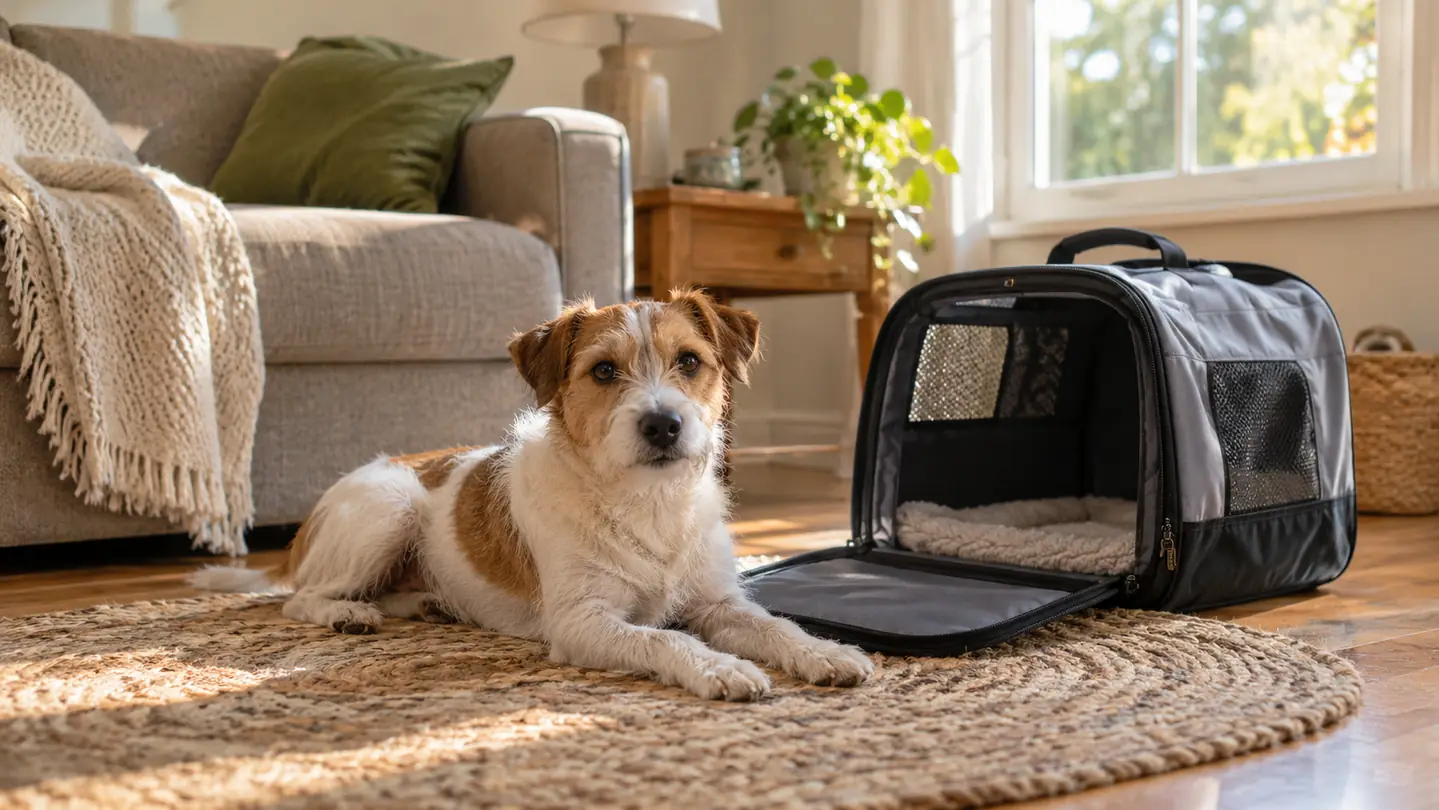
The first time I put Pip in a pet carrier, the carrier was not mine and the trip was not optional. It was the last week of December, three weeks after I brought him home from the county shelter, and he had a vet appointment four miles away. I borrowed Marge's hard plastic crate from two doors down. It was built for a dog twice his size, it rattled over every frost crack in the road, and my thirteen-pound terrier-Chihuahua mix shook for the entire twelve minutes. By the time we pulled into the lot he had pressed himself into the far corner with his eyes half shut. In January, before his next visit, I ordered the Henkelion soft-sided carrier.
Here is what I want to say to the person standing in the pet aisle with a phone in one hand and a rescue dog at home who is still deciding whether to trust you. The carrier was the easy part. The two weeks before the first ride were the real work, and no product listing mentions them, because a listing cannot. A Henkelion carrier is a bag with a zipper, a strap, and two padded handles. It is a good bag. It will not, by itself, convince a scared four-year-old rescue dog that climbing inside is a fine idea. That took me, a bag of chicken, and fourteen days of looking silly on my own living room floor.
The Quick Verdict
Light, foldable, and roomy for a 13-pound dog under a 15-pound rating. Three vet trips, no accidents, no escapes. Buy it, then give it two weeks on the living room floor before the first ride.
Amazon Check Today's Price →13 Pounds of Dog Inside a 15-Pound Rating: The Size I Actually Bought
The Henkelion carrier is 17 by 11 by 11 inches and rated to 15 pounds. Pip fits with room to turn around and lie down, and it folds flat on a shelf between appointments. Today's price is on the listing.
Amazon Check Today's Price on Amazon →How I've Used It
We have made four vet trips since December. The first one was in Marge's borrowed crate. The other three were in this carrier, in January, April, and September, and each one was a twelve-minute drive to Dr. Amaral's office four miles from my door.
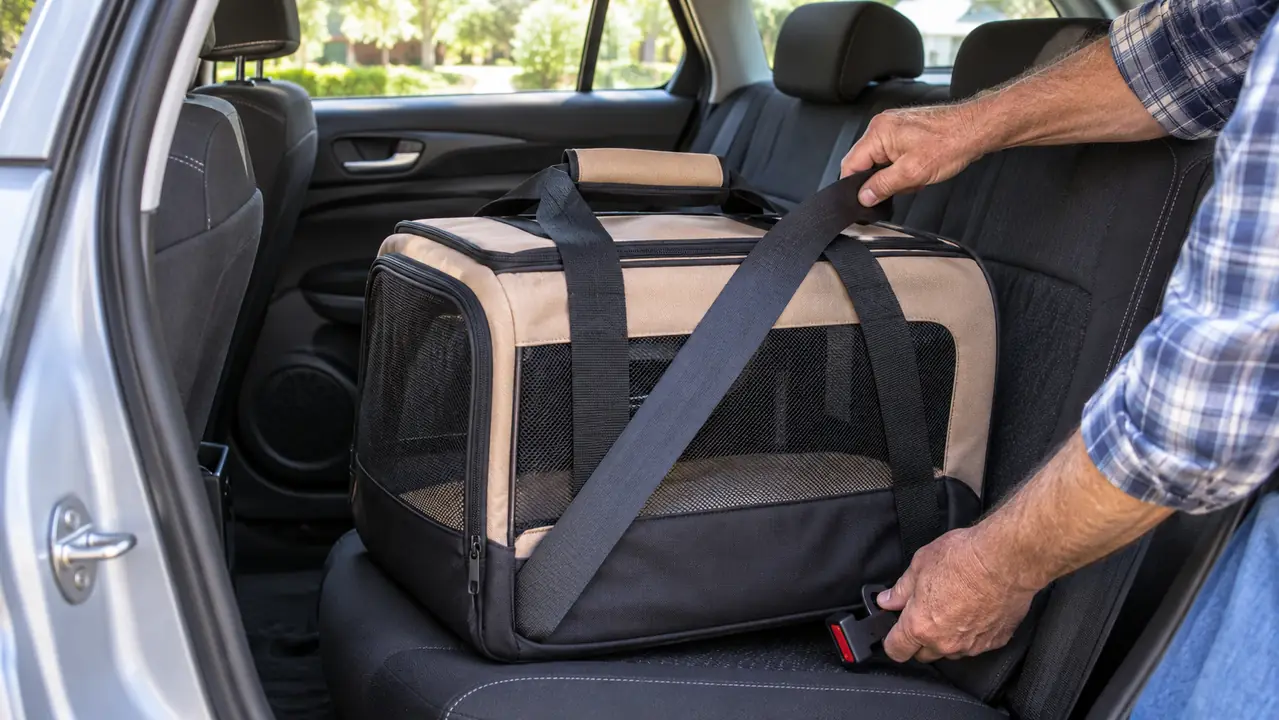
The January trip was the first. I had spent two weeks on the living room floor with him and an open carrier before I zipped it shut for the first time, and I still expected the worst. He fussed for about a mile and then went quiet. I set the carrier on the back seat of my hatchback and ran the seatbelt across the front of it. I have done the same thing every time since, because it holds the carrier still and it holds him still with it.
Between trips it does not live in the car. It comes out the same day, gets wiped down with a damp cloth, and goes up on the top shelf of my front closet folded flat. That is nine months of a carrier sitting folded on a shelf and coming back down in one piece.
The April and September trips were unremarkable, which is the highest compliment I can pay a pet carrier. He walked out of the house, let me lift him in, and lay down before I had the zipper closed. That is not the carrier doing something clever. That is two weeks of boring repetition, done eight months earlier, finally paying off.
The September appointment is the one that told me the most. Dr. Amaral's office has a small waiting room with four chairs and a scale just inside the door, and I set the carrier up on the bench instead of down on the floor, because the floor is where every other dog in Plymouth walks through. Pip stayed down and quiet for the eleven minutes we waited. When the technician called us I carried him in by the handle, set the carrier on the exam table, and unzipped it so he could walk out on his own four feet. He thought about it for about thirty seconds and then he did it. Nobody had to tip him out like a bag of laundry. That is the part I did not know to want when I bought it: once it is unzipped, a frightened dog can leave when he is ready and not when I decide.
One thing I would do differently from that January ride. I lined the bottom with a folded bath towel, thinking it would be softer, and by the time we reached the office the towel had bunched itself into the far corner and left him standing on bare bottom panel. He did not seem bothered. I was bothered. Now I put the towel in flat, tuck the edges under the panel before I zip, and it stays put for the whole drive. Small thing. It is the kind of small thing nobody writes about and everybody eventually figures out.
What Nobody Tells You About the First Two Weeks
The advice I got from everyone, including the woman at the shelter, was the same. Leave it out and let him get used to it. That is correct and it is also uselessly vague, so here is what it actually looked like in my living room.
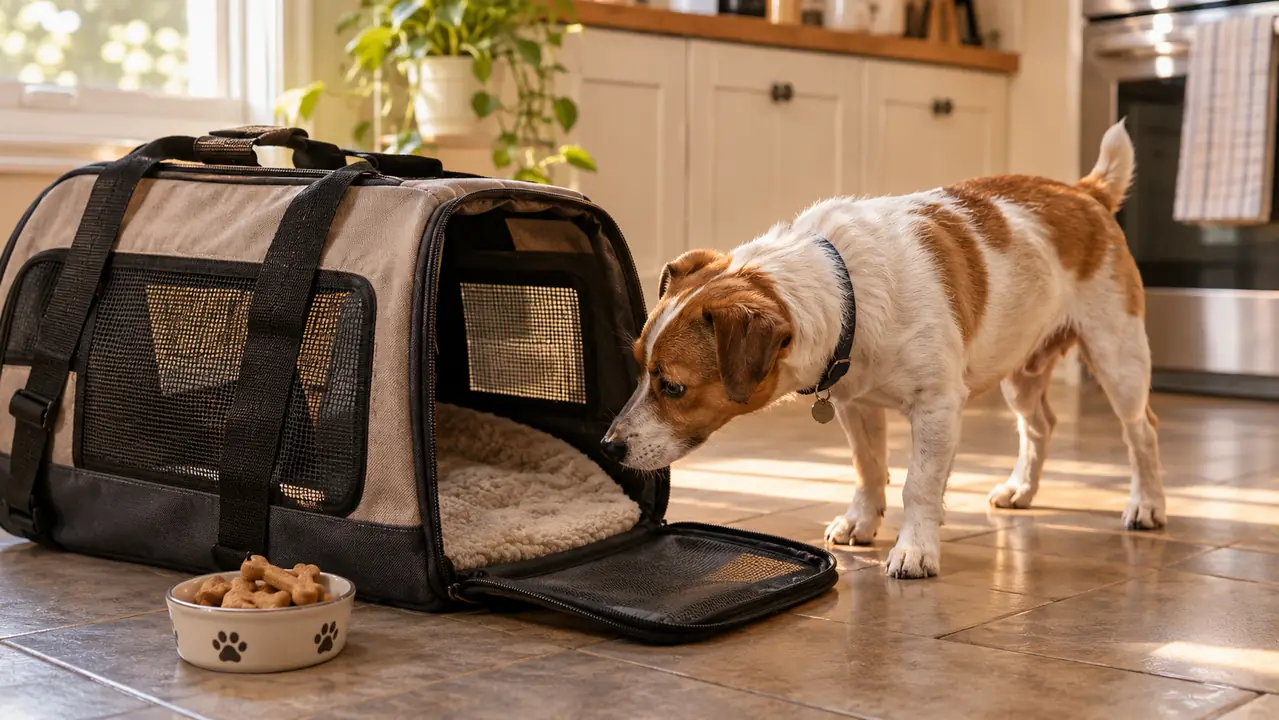
Days one through three, he would not put a paw near it. I set it on the floor with the zipper open, dropped a piece of chicken just inside the opening, and went and sat on the couch and pretended to read a magazine. He took the chicken off the floor beside it and left the room. On day four his head went inside. On day six all four feet went in and he backed out immediately, as if the floor had moved.
On day fourteen he lay down in it while I was sitting right there. I did not say a word out loud, because I did not want to spoil it. That is the whole of the training. Fourteen days, a handful of chicken, and no drama, and it worked because I did not rush the calendar and because nobody was watching me do it.
The carrier stayed open on the living room floor for the whole two weeks. It never went near the car. That part matters more than which carrier you buy. If you bring it home the night before the appointment and buckle your dog into it in the driveway, you will get a bad first ride and you will blame the bag. The bag will be fine. The dog will remember.
What I almost did first, and why I dropped it: I thought about leaving the carrier out in the car so he would get used to the sight of it in the place we were actually going to use it. But a strange bag sitting in a cold car was never going to win him over that January. Train the dog where the dog is comfortable, then move the comfort to the car.
I also tried putting his breakfast bowl right at the opening on day two, which the internet will tell you is the trick. He ate the food and walked off. Food going in the front door does not mean the dog goes in the front door, and I stopped treating every meal as a training session because it was making us both tired. Two or three pieces of chicken a day was plenty. He is a thirteen-pound dog. A whole handful of treats is a meal, and a full dog has no reason to work for anything.
Day four his head went inside. Day six, all four feet. Day fourteen he lay down in it while I sat right there.
What the Listing Gets Right
The closure is a zipper. I open the whole carrier, lift him in with both hands, and zip it back up, and in three trips it has not caught or snagged once. That sounds like nothing to read about. It is the difference between a quiet dog and a wrestling match on a tailgate in the vet parking lot.
The shoulder strap adjusts and the handles are padded, and both of those are on the listing rather than in my imagination. I carry it by the handle in the parking lot, because swinging it on my shoulder makes him shift his weight, and a shifting dog moves a soft carrier. The carrier itself is listed at 2.2 pounds. Add thirteen pounds of dog and you have a load that is awkward more than heavy, and a padded handle earns its keep on the walk from the car to the front desk.
It folds. The listing calls it collapsible and portable and that is honest. It lives on the top shelf of my front closet between appointments, and when I bring it down it needs a minute to sit up straight again before I zip him in. I do not count that as a flaw. It is the trade for not having a plastic box in my front hall.
I measured Pip with the tape from my kitchen drawer before I ordered anything, and I have measured him twice since out of pure stubbornness. Chest 17 inches around, neck 11. That is the number that decided the purchase, not the weight. He was 13 pounds in January and he is 13 pounds in September, because he is about four years old and done growing, but a younger dog can put on a pound between one appointment and the next and I wanted to know the arithmetic before it changed on me. At 13 pounds he sits under the 15-pound rating with room to turn around. A carrier you can rattle the dog around inside of is not doing the job, no matter how many pockets it has.
The number I would underline is 15 pounds. Pip is 13. He can stand, turn around, and lie down with his chin on the edge, and it looks right. There is not a lot of headroom above him. If your dog is 14 pounds, you are fine. If your dog is 16 pounds, you are over the rating, and the rating is not a suggestion. Measure the dog, then believe the tape.
It came in January, folded the way it still folds, and I unfolded it on the kitchen table with the kettle going and the box still on the floor. It sat up almost immediately. By that afternoon it was on the living room rug with the zipper open and a piece of chicken sitting just inside the door, and Pip was on the far side of the room pretending it was not there. That is where the whole thing started, and that is what I would tell you to picture instead of the product photo.
The listing says airline approved and I am not going to pretend I know what your airline will say at the gate. I have never flown with Pip. This carrier has been in a hatchback and in a vet's waiting room, and that is the whole of its travel history. If a flight is the reason you are shopping, call the airline and read their exact size rules before you buy anything from anybody, me included.
What I Liked
- Fits a 13-pound dog with room to stand, turn, and lie down
- Folds flat on a closet shelf between appointments
- Zipper has not snagged once in three trips
- Padded handles make the parking lot walk easier
- Adjustable shoulder strap for carrying it in
- Top opens wide enough for a scared dog to walk out on his own
Where It Falls Short
- Rated to 15 pounds, so there is little headroom for a bigger small dog
- Soft sides lean when the dog settles, and it needs steadying on the seat
- Needs a minute to sit up straight after coming off the shelf
- Requires about two weeks of treats before it is genuinely useful
- I cannot vouch for the airline-approved claim from experience
The Honest Downsides
A soft carrier is soft, and that cuts both ways. When Pip settles on the back seat the whole thing leans, and I ended up wedging it against the seat back with a rolled blanket so it stayed upright for the drive. That is not a defect. That is what soft means. If you want something that sits like furniture no matter what the dog does, you want a hard crate, and that is a different purchase with different problems.
To be concrete about it: on the April drive I took the corner off Grenadier Road a little faster than I meant to, and the whole Henkelion carrier tipped toward the door. Nothing bad happened. The seatbelt held it exactly where I had put it, and Pip scrambled for two seconds and then lay back down. I pulled into the church lot and sat there for a minute with my hands on the wheel feeling foolish. After that I started running the belt across the front and putting the rolled blanket on the opposite side, so the carrier has something to lean into instead of somewhere to fall. The blanket lives in the back of the car now. No manufacturer is putting that on a listing, and every soft carrier on the market needs it.
The second honest thing is that this did not make him love the car. It made the car survivable. He still does not love it. He gets in, he lies down, he is quiet, and he is glad to get out at the other end. Three trips is not a mountain of evidence, but it is three trips without the shaking, and I will take that and stop asking for more.
And the last thing, which took me a while to understand. A soft carrier is not a crate and it is not containment. It is a way to move a small dog from one place to another without frightening him half to death. If you want somewhere to leave him while you are out, this is the wrong tool, and it is the wrong tool in a way that would be unkind to the dog. The Henkelion carrier is for transport. That is all it is for, and it does that well.
Who This Is For
This is for the person with a small dog who needs to get to the vet, and maybe to a groomer, and maybe on a plane eventually, and who wants the next trip to be less awful than the last one. Under 15 pounds. Two weeks before the appointment. Willing to sit on the floor and be patient with an open bag. If that is you, this carrier does its job and does it without any fuss.
It is also for the person with nowhere to put a hard crate. My house is one story with no stairs and one closet worth using, and a folded carrier on a shelf is a different thing entirely from a plastic box in the hall. I did not expect that to matter to me as much as it does.
Who Should Skip It
Skip it if your dog is over 15 pounds, or close enough to the line that you are doing arithmetic and hoping. Skip it if what you actually need is containment rather than transport. Skip it if the appointment is tomorrow, because a first ride in an untrained carrier teaches a dog to hate the car and you will spend a long time undoing that lesson.
And skip it if the only reason you are looking is a flight next month and you have not read your airline's rules. I cannot help you there. The airline-approved wording is something I have read on a listing, not something I have tested at a gate with a dog and a boarding pass.
If Your Dog Is Under 15 Pounds, This Is the Carrier That Went to the Vet Three Times
Seventeen by eleven by eleven inches, rated to 15 pounds, folds flat between trips. Give it two weeks on the living room floor before the first ride. That part is not in the box, and it is the part that decides how the first ride goes.
Amazon Check Today's Price on Amazon →